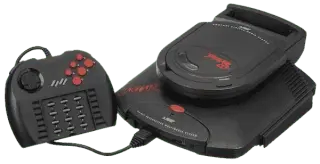
Atari Jaguar
Technical Specs
CPU
Motorola 68000 @ 13.295 MHz (general-purpose host processor); Tom: 32-bit GPU (RISC, programmable) + 64-bit Object Processor + 64-bit Blitter @ 26.59 MHz; Jerry: 32-bit DSP (RISC, programmable) @ 26.59 MHz
GPU
Tom chip: 64-bit Object Processor handles display list rendering with line-based object types (bitmap, scaled bitmap, GPU objects); 64-bit Blitter performs hardware-accelerated pixel operations including z-buffered rendering, gouraud shading, texture mapping; programmable GPU core can execute custom rendering code
Memory
2 MB DRAM (main system RAM, accessible via 64-bit bus by Tom and Jerry), 32 KB boot ROM, Tom and Jerry each contain small internal SRAM
Storage
Cartridge-based ROM (up to 6 MB standard, theoretically expandable), Jaguar CD adds CD-ROM support
Display
Variable resolution from 160x200 to 800x576, supports CRY (16-bit Cyan-Red-Intensity), RGB16 (16-bit direct color), RGB24 (24-bit true color with 16.7 million colors); hardware features include scaling, rotation, and distortion of graphical objects
Audio
Jerry chip: DSP-based audio processing, 16-bit stereo DAC output, wavetable synthesis, sample playback, and custom audio processing via programmable DSP core; CD-quality audio capable via software
Media
Atari Jaguar Cartridge (proprietary 48-pin edge connector), Jaguar CD add-on (double-speed CD-ROM, only 13 games released)
History
The Atari Jaguar, released November 23, 1993, was marketed as the world's first 64-bit home console ??a bold claim from a company that was once the colossus of the video game industry but had been brought low by the 1983 crash, corporate upheavals, and increasingly fierce competition from Japanese manufacturers. The Jaguar represented Atari Corporation's final, desperate attempt to reclaim relevance in the console market.
The Jaguar's hardware architecture was genuinely innovative, if controversial. It contained five processors: the 'Tom' chip (GPU, object processor, and 64-bit blitter), the 'Jerry' chip (DSP and sound), a Motorola 68000 as the general-purpose CPU, and additional processors for object handling and audio. The system could theoretically process data along a 64-bit bus, justifying Atari's '64-bit' marketing, though critics pointed out that the main CPU was a 16/32-bit Motorola 68000 and the overall system architecture was more accurately described as a hybrid design.
Despite the hardware's potential, the Jaguar's software library was critically small and inconsistent. Only approximately 50 commercial games were released in its lifetime. The standout titles, however, were genuinely excellent. Tempest 2000, an abstract shooter designed by Jeff Minter, is widely regarded as one of the finest games of the early 1990s, featuring hypnotic visuals, a trance soundtrack, and addictive gameplay. Alien vs. Predator was a moody, atmospheric first-person shooter that may have been the Jaguar's best exclusive. Doom received a fast, capable port. Iron Soldier offered impressive mech combat with real 3D polygon graphics.
The Jaguar's controller was immediately criticized for its unwieldy size and the inclusion of a 12-button telephone-style numeric keypad that few games utilized meaningfully. Atari later released the Pro Controller, a more ergonomic six-button gamepad, but by then the system's fate was largely sealed.
The Jaguar CD, a CD-ROM add-on released in September 1995, attempted to extend the console's capabilities with larger storage. Only 13 CD games were released, and the peripheral was plagued by hardware reliability issues, with the unit's open-top design making it vulnerable to damage.
The Jaguar sold an estimated 125,000 to 250,000 units before Atari Corporation merged with JT Storage in 1996, ending the company's 24-year run as a console manufacturer. The Jaguar's molds and rights were later publicly released, making it one of the few consoles whose hardware designs are in the public domain, which has led to an active homebrew development scene.
Variants & Revisions
Atari Jaguar (J8001)
Released: November 23, 1993
The sole Jaguar console model. Large angular black case with a cartridge slot on top. Included one controller featuring a directional pad, A/B/C action buttons, Pause and Option buttons, and a 12-key numeric keypad with game-specific overlays.
Atari Jaguar CD (JC100)
Released: September 21, 1995
A CD-ROM add-on that mounted on top of the Jaguar. Double-speed drive with unique open-top disc tray design. Only 13 CD games were released. Reliability was poor, with mold and jewel case design causing frequent read errors. Included VLM (Virtual Light Machine) visualizer by Jeff Minter.
Atari Jaguar Pro Controller
Released: January 1, 1995
A redesigned six-button controller with shoulder buttons. More ergonomic than the original pad, addressing major criticism of the launch controller. Third-party and homebrew games often require it.
Development Story
The Atari Jaguar was not designed by Atari Corporation itself but by Flare Technology, a small British hardware design firm founded by Martin Brennan and John Mathieson. The duo had previously designed the unreleased Konix Multisystem and the Flare One computer, building a reputation for ambitious designs on tight budgets. Atari's co-founder and then-CEO Sam Tramiel contracted Flare to design two systems: the Jaguar (codenamed 'Panther' in early development before the name shifted) and a companion handheld called the Lynx II (which was never produced).
Brennan and Mathieson designed the Tom and Jerry custom chips to be a leap beyond existing console technology. Tom was the core graphics engine: its 64-bit blitter could perform high-speed memory copies, fills, and transformations, while its GPU was a programmable RISC processor capable of executing custom rendering routines. Jerry handled DSP operations including sound synthesis and processing, also using a programmable RISC core. The philosophy was to provide flexible, programmable hardware rather than fixed-function graphics pipelines.
However, this flexibility became a liability. Programming the Jaguar efficiently required developers to write custom rendering code for Tom's GPU, bypassing the Motorola 68000 entirely for performance-critical tasks. In practice, many developers ??particularly those unfamiliar with the hardware ??simply wrote their game logic on the 68000 and used Tom and Jerry only for basic operations, leaving the powerful custom chips heavily underutilized. Atari's documentation and development tools were widely criticized as inadequate, with incomplete manuals and buggy development kits compounding the difficulty.
The decision to use the Motorola 68000 as the system's general-purpose CPU was a cost-saving measure that created an architectural bottleneck. The 68000 was a 1979-era processor running at 13.3 MHz. While it served adequately as a traffic controller for the custom chips, any developer who relied on it for game logic (as many did) would get performance comparable to a Genesis rather than a next-generation system. The optimal approach was to run everything on Tom's GPU and Jerry's DSP, but this required expertise that few studios had.
Sam Tramiel's marketing strategy was straightforward: position the Jaguar as the most powerful console available and compete on specifications. The 'Do the Math' advertising campaign challenged consumers to compare the Jaguar's 64-bit architecture against the Genesis (16-bit) and SNES (16-bit). The campaign was clever but the product couldn't consistently deliver on the promise. When 3DO (launched the same year with stronger third-party support) and later PlayStation and Saturn arrived, the Jaguar's small library and inconsistent software quality became impossible to overlook.
The homebrew community that emerged after the Jaguar's commercial death has been remarkably productive. With the console's hardware specifications publicly available, independent developers continue to produce new games that often demonstrate what the Jaguar was truly capable of when its custom hardware is properly utilized.
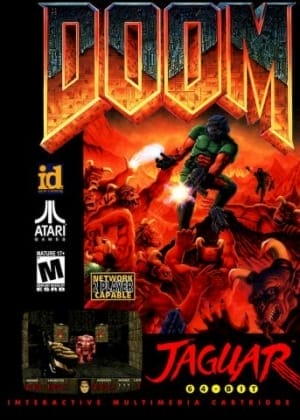
DOOM
• 1994
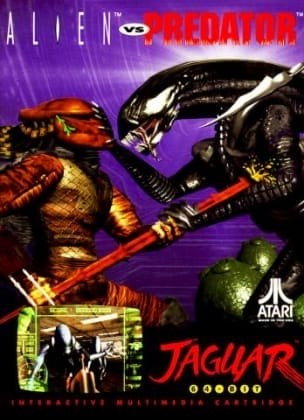
Alien vs Predator
• 1994
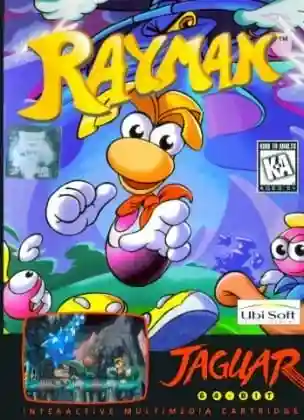
Rayman
• 1995
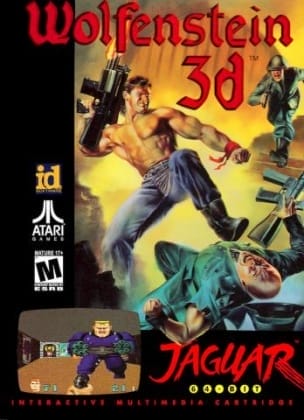
Wolfenstein 3D
• 1994
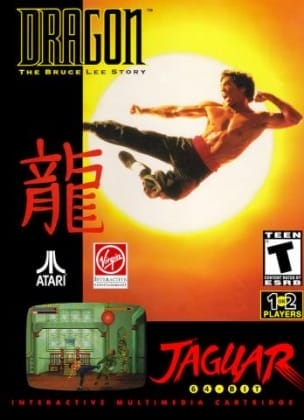
Dragon: The Bruce Lee Story
• 1995
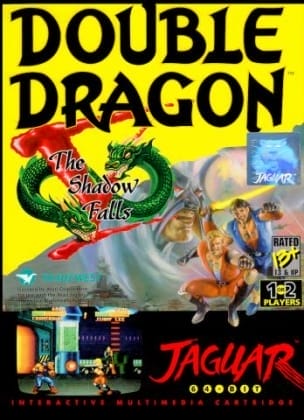
Double Dragon V: The Shadow Falls
• 1994
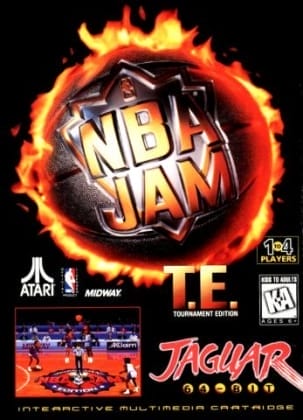
NBA Jam: Tournament Edition
• 1995

Bubsy in Fractured Furry Tales
• 1995
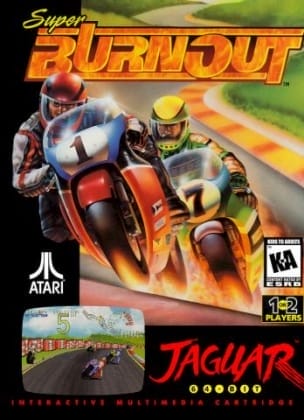
Super Burnout
• 1994
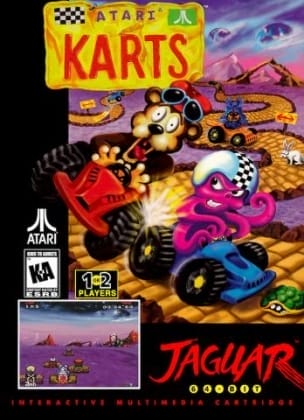
Atari Karts
• 1995
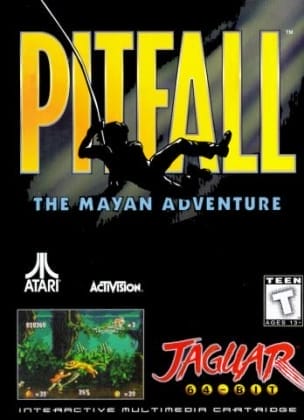
Pitfall: The Mayan Adventure
• 1994
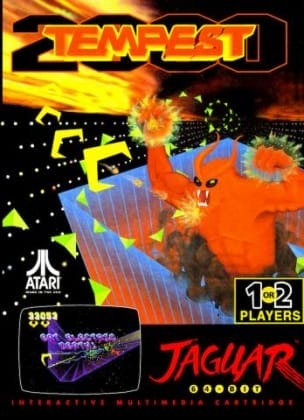
Tempest 2000
• 1994
About the Atari Jaguar
The Atari Jaguar (Jaguar) is a home video game console manufactured by Atari. Released on November 23, 1993, it belongs to the 5th generation of gaming hardware.
With a library of 28+ ROMs available to download, the Jaguar remains one of the most popular platforms for retro gaming enthusiasts. Each ROM is available for free download and compatible with popular emulators like RetroArch, giving you instant access to classic gaming history.
Whether you're looking for Jaguar ROMs to play on your PC, phone, or dedicated retro handheld, our library has you covered with verified ROM files and complete game information.