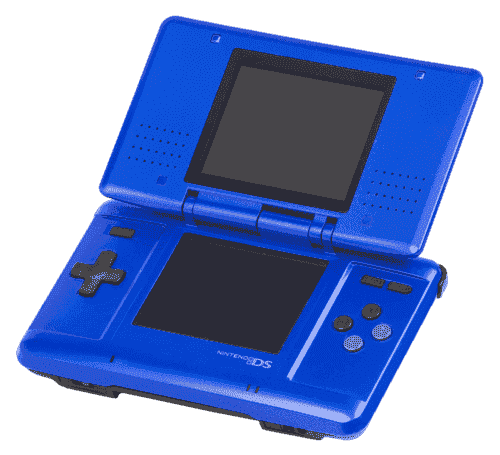
NDS
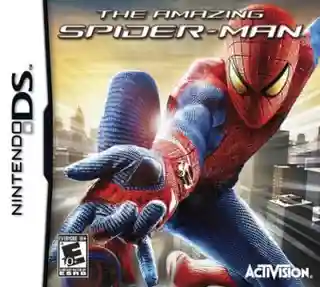
The Amazing Spider-Man
The Amazing Spider-Man for Nintendo DS is a side-scrolling action game based on the 2012 film, featuring original story content that bridges the events between the movie and its sequel. The DS version offers touch-controlled web-swinging mechanics and comic book-style cutscenes tailored for handheld play.
Release Date
January 1, 2012
Players
1
Region
US
ROM Size
19.9 MB
Share this game
Story
Publication history Writer-editor Stan Lee and artist/co-plotter Steve Ditko created the character of Spider-Man, and the pair produced 38 issues from March 1963 to July 1966. Ditko left after the 38th issue, while Lee remained as writer until issue 100. Since then, many writers and artists have taken over the monthly comic through the years, chronicling the adventures of Marvel's most identifiable hero. The Amazing Spider-Man has been the character's flagship series for his first fifty years in publication, and was the only monthly series to star Spider-Man until Peter Parker, The Spectacular Spider-Man , in 1976, although 1972 saw the debut of Marvel Team-Up , with the vast majority of issues featuring Spider-Man along with a rotating cast of other Marvel characters. Most of the major characters and villains of the Spider-Man saga have been introduced in Amazing , and with few exceptions, it is where most key events in the character's history have occurred. The title was published continuously until No. 441 (Nov. 1998) when Marvel Comics relaunched it as vol. 2 No. 1 (Jan. 1999), but on Spider-Man's 40th anniversary, this new title reverted to using the numbering of the original series, beginning again with issue No. 500 (Dec. 2003) and lasting until the final issue, No. 700 (Feb. 2013). 1960s Due to strong sales on the character's first appearance in Amazing Fantasy No. 15, Spider-Man was given his own ongoing series in March 1963. The initial years of the series, under Lee and Ditko, chronicled Spider-Man's nascent career as a masked super-human vigilante with his civilian life as hard-luck yet perpetually good-humored and well-meaning teenager Peter Parker . Peter balanced his career as Spider-Man with his job as a freelance photographer for The Daily Bugle under the bombastic editor-publisher J. Jonah Jameson to support himself and his frail Aunt May . At the same time, Peter dealt with public hostility towards Spider-Man and the antagonism of his classmates Flash Thompson and Liz Allan at Midtown High School, while embarking on a tentative, ill-fated romance with Jameson's secretary, Betty Brant . By focusing on Parker's everyday problems, Lee and Ditko created a groundbreakingly flawed, self-doubting superhero, and the first major teenaged superhero to be a protagonist and not a sidekick. Ditko's quirky art provided a stark contrast to the more cleanly dynamic stylings of Marvel's most prominent artist, Jack Kirby , and combined with the humor and pathos of Lee's writing to lay the foundation for what became an enduring mythos. Most of Spider-Man's key villains and supporting characters were introduced during this time. Issue No. 1 (Mar. 1963) featured the first appearances of J. Jonah Jameson and his astronaut son John Jameson , and the supervillain the Chameleon . It included the hero's first encounter with the superhero team the Fantastic Four . Issue No. 2 (May 1963) featured the first appearance of the Vulture and the Tinkerer as well as the beginning of Parker's freelance photography career at the newspaper The Daily Bugle . The Lee-Ditko era continued to usher in a significant number of villains and supporting characters, including Doctor Octopus in No. 3 (July 1963); the Sandman and Betty Brant in No. 4 (Sept. 1963); the Lizard in No. 6 (Nov. 1963); Living Brain in No. 8 (Jan. 1964); Electro in No. 9 (Mar. 1964); Mysterio in No. 13 (June 1964); the Green Goblin in No. 14 (July 1964); Kraven the Hunter in No. 15 (Aug. 1964); reporter Ned Leeds in No. 18 (Nov. 1964); and the Scorpion in No. 20 (Jan. 1965). The Molten Man was introduced in No. 28 (Sept. 1965) which also featured Parker's graduation from high school. Peter began attending Empire State University in No. 31 (Dec. 1965), which featured the first appearances of friends and classmates Gwen Stacy and Harry Osborn . Harry's father, Norman Osborn first appeared in No. 23 (April 1965) as a member of Jameson's country club but was not named nor revealed as Harry's father until No. 37 (June 1966). One of the most celebrated issues of the Lee-Ditko run is No. 33 (Feb. 1966), the third part of the story arc " If This Be My Destiny...! ", which features the dramatic scene of Spider-Man, through force of will and thoughts of family, escaping from being pinned by heavy machinery. Comics historian Les Daniels noted that "Steve Ditko squeezes every ounce of anguish out of Spider-Man's predicament, complete with visions of the uncle he failed and the aunt he has sworn to save." Peter David observed that "After his origin, this two-page sequence from Amazing Spider-Man No. 33 is perhaps the best-loved sequence from the Stan Lee/Steve Ditko era." Steve Saffel stated the "full page Ditko image from The Amazing Spider-Man No. 33 is one of the most powerful ever to appear in the series and influenced writers and artists for many years to come." and Matthew K. Manning wrote that "Ditko's illustrations for the first few pages of this Lee story included what would become one of the most iconic scenes in Spider-Man's history." The story was chosen as No. 15 in the 100 Greatest Marvels of All Time poll of Marvel's readers in 2001. Editor Robert Greenberger wrote in his introduction to the story that "These first five pages are a modern-day equivalent to Shakespeare as Parker's soliloquy sets the stage for his next action. And with dramatic pacing and storytelling, Ditko delivers one of the great sequences in all comics." Although credited only as artist for most of his run, Ditko would eventually plot the stories as well as draw them, leaving Lee to script the dialogue. A rift between Ditko and Lee developed, and the two men were not on speaking terms long before Ditko completed his last issue, The Amazing Spider-Man No. 38 (July 1966). The exact reasons for the Ditko-Lee split have never been fully explained. Spider-Man successor artist John Romita Sr. , in a 2010 deposition , recalled that Lee and Ditko "ended up not being able to work
Some information sourced from Wikipedia, available under CC BY-SA 3.0.