GB
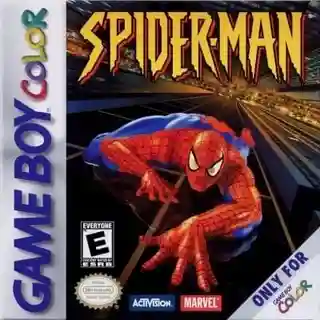
Spider-Man
The 1990 Game Boy debut of Marvel's web-slinger features Peter Parker battling classic villains across New York City. This monochromatic action-platformer includes wall-crawling mechanics, web-shooting combat, and boss fights against Electro, Sandman, and Doctor Octopus.
Release Date
January 1, 1990
Players
1
Region
US
ROM Size
390 KB
Share this game
Story
Publication history He said the teenage demand for comic books and a character with whom they could identify led to the creation of Spider-Man. As with Fantastic Four, Lee saw Spider-Man as an opportunity to "get out of his system" what he felt was missing in comic books. There are many conflicting stories about the inspiration and precise authorship of the various aspects of Spider-Man's appearance and character. In his autobiography, Lee cites the non-superhuman pulp magazine crime fighter the Spider as a great influence. Besides the name, the Spider was wanted by both the law and the criminal underworld (a defining theme of Spider-Man's early years) and had through years of ceaseless struggle developed a "sixth sense", which warns him of danger, the inspiration for Spider-Man's "spider-sense". In a multitude of print and video interviews, Lee also says he was inspired by seeing a spider climb up a wall—adding in his autobiography that he has told that story so often he has become unsure of whether or not this is true. Although at the time teenage superheroes were usually given names ending with "boy", Lee says he chose "Spider-Man" because he wanted the character to age as the series progressed, and felt the name "Spider-Boy" would have made the character sound inferior to other superheroes. Comics scholar Ben Saunders points out that this emphasis on adolescence was an important innovation for superhero comics . Lee required Marvel publisher Martin Goodman 's approval for the character. In a 1986 interview, Lee gives his arguments against Goodman's objections. Goodman eventually agreed to a Spider-Man tryout in what Lee, in numerous interviews, recalled as what would be the final issue of the science-fiction and supernatural anthology series Amazing Adult Fantasy , which was renamed Amazing Fantasy for issue #15 ( cover-dated August 1962, on sale June 5, 1962). In particular, Lee states that the decision that Amazing Fantasy would be canceled after issue #15 was the only reason Goodman allowed him to present Spider-Man. While this was the final issue, its editorial page anticipated the continuing appearances of Spider-Man in future issues. Lee received Goodman's approval for the name Spider-Man and the "ordinary teen" concept and approached artist Jack Kirby . As comics historian Greg Theakston recounts, Kirby told Lee about an unpublished character on which he had collaborated with Joe Simon in the 1950s, in which an orphaned boy living with an old couple finds a magic ring that granted him superhuman powers. Lee and Kirby "immediately sat down for a story conference", Theakston writes, and Lee afterward directed Kirby to flesh out the character and draw some pages. Steve Ditko would be the inker. When Kirby showed Lee the first six pages, Lee recalled, "I hated the way he was doing it! Not that he did it badly—it just wasn't the character I wanted; it was too heroic". Lee turned to Ditko, who developed an art style Lee found satisfactory. Ditko recalled: One of the first things I did was to work up a costume. A vital, visual part of the character. I had to know how he looked ... before I did any breakdowns. For example: A clinging power so he wouldn't have hard shoes or boots, a hidden wrist-shooter versus a web gun and holster, etc. ... I wasn't sure Stan would like the idea of covering the character's face but I did it because it hid an obviously boyish face. It would also add mystery to the character.... Although the interior artwork was by Ditko alone, Lee rejected Ditko's cover art and commissioned Kirby to pencil a cover that Ditko inked. As Lee explained in 2010, "I think I had Jack sketch out a cover for it because I always had a lot of confidence in Jack's covers." Kirby disputed Lee's version of the story and claimed Lee had minimal involvement in the character's creation. According to Kirby, the idea for Spider-Man had originated with Kirby and Joe Simon , who in the 1950s had developed a character called the Silver Spider for the Crestwood Publications comic Black Magic , but the character was left unused. Simon, in his 1990 autobiography, disputed Kirby's account, asserting that Black Magic was not a factor and that Simon devised the name "Spider-Man" (later changed to "The Silver Spider"), while Kirby outlined the character's story and powers. Simon later elaborated that his and Kirby's character conception became the basis for Simon's Archie Comics superhero, the Fly . Artist Steve Ditko stated that Lee liked the name Hawkman from DC Comics , and that "Spider-Man" was an outgrowth of that interest. Simon concurred that Kirby had shown the original Spider-Man version to Lee, who liked the idea and assigned Kirby to draw sample pages of the new character, but disliked the results—in Simon's description, " Captain America with cobwebs". Writer Mark Evanier notes that Lee's reasoning that Kirby's character was too heroic seems unlikely—Kirby still drew the covers for Amazing Fantasy #15 and the first issue of The Amazing Spider-Man . Evanier also disputes Kirby's given reason that he was "too busy" to draw Spider-Man in addition to his other duties, since Kirby was, said Evanier, "always busy". Neither Lee's nor Kirby's explanation explains why key story elements like the magic ring were dropped; Evanier states that the most plausible explanation for the sudden change was that Goodman, or one of his assistants, decided that Spider-Man, as drawn and envisioned by Kirby, was too similar to the Fly. Author and Ditko scholar Blake Bell writes that it was Ditko who noted the similarities to the Fly. Ditko recalled that "Stan called Jack about the Fly", adding that "ays later, Stan told me I would be penciling the story panel breakdowns from Stan's synopsis." It was at this point that the entire concept of the strip went through a major overhaul. "Out went the magic ring, adult Spider-Man and whatever legend ideas that Spider-Man story would have contained." Lee gave Ditko the
Media Reviews
IGN
2009
Some information sourced from Wikipedia, available under CC BY-SA 3.0.